The UK's NCSC just told the world its technical debt bill is coming due- 225
May 5, 2026
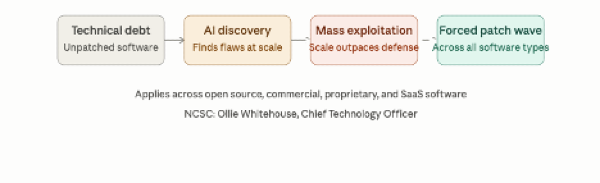
The UK's National Cyber Security Centre has stopped short of predicting a single dramatic attack and instead warned of something harder to defend against: a coming wave of patches large enough to strain every organization running software with unresolved technical debt. NCSC Chief Technology Officer Ollie Whitehouse framed the mechanism plainly — AI, in the hands of sufficiently skilled operators, is already showing the ability to find and exploit accumulated software weaknesses at a scale and pace the industry has not had to absorb before, and the agency now expects a forced correction across open source, commercial, proprietary, and SaaS software alike.
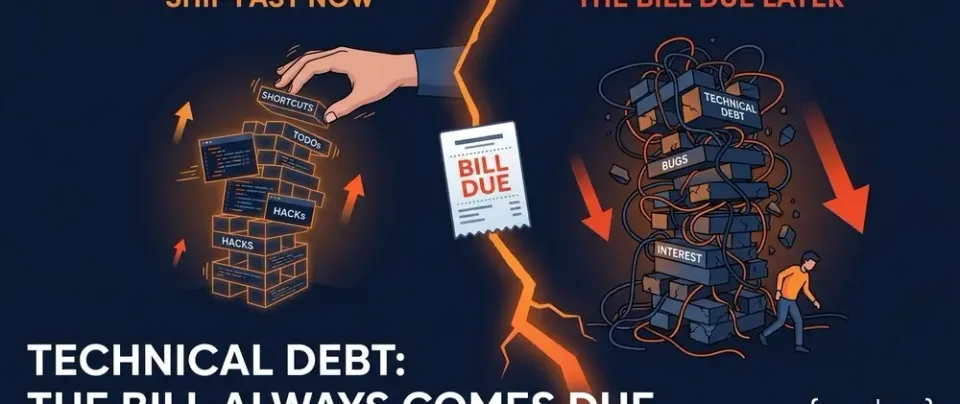
What distinguishes NCSC's warning from the broader run of AI-threat commentary this batch has tracked is its framing of the target. Rather than pointing to a specific adversary or campaign, Whitehouse is describing technical debt itself as the exposed surface — the accumulated backlog of unpatched, poorly maintained, or end-of-life software that has quietly persisted across the technology ecosystem because finding and weaponizing its flaws used to be labor-intensive enough to keep most of it below the threshold of active exploitation. AI-assisted vulnerability discovery removes that labor constraint. If a sufficiently capable model can identify and chain exploitable flaws across an organization's stack faster than defenders can patch, the debt that was tolerable at a slow discovery pace becomes an active liability the moment discovery accelerates — which is precisely the acceleration Google's GTIG researchers and the UK's AI Security Institute have each separately documented this batch, from opposite ends of the same trend.
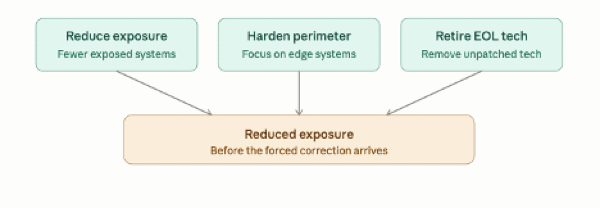
NCSC's practical guidance follows directly from that framing rather than offering generic hardening advice. The agency is urging organizations to shrink their external attack surface deliberately, prioritize security attention on perimeter-facing technologies specifically — the components most exposed to opportunistic AI-assisted scanning — and retire end-of-life products that no longer receive patches at all, since unpatched legacy software is precisely the technical debt category AI-assisted discovery is best positioned to exploit at scale. The guidance reads less as a checklist and more as triage logic: if a forced correction is coming regardless, the organizations best positioned to absorb it are the ones that have already reduced how much unpatched surface they are carrying into it.