Taiwan's rail hack proves the threshold for infrastructure disruption has collapsed- 221
June 28, 2026
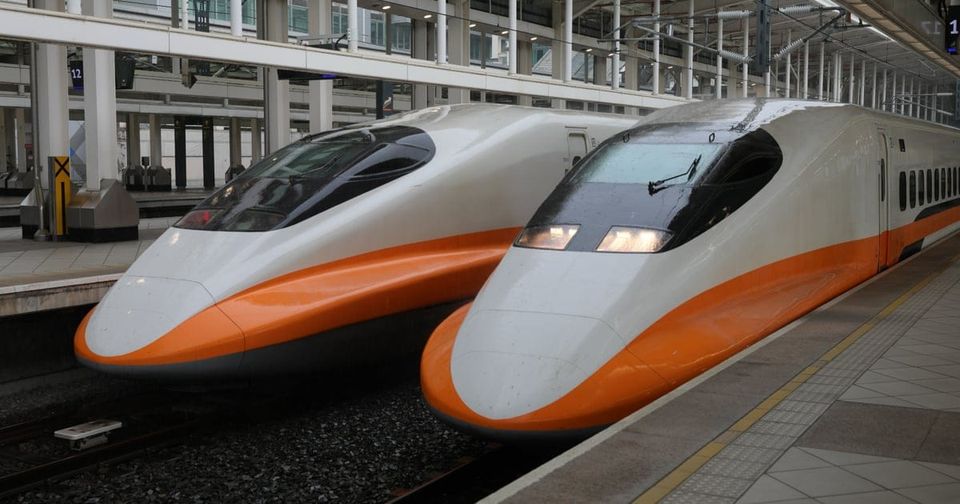
For years, warnings about attacks on critical infrastructure carried an unspoken assumption: that disabling a national rail network, a power grid, or a water system required the resources of a state. Taiwan's high-speed rail incident in April 2026 dismantled that assumption in under an hour. A 23-year-old university student, using off-the-shelf radio equipment and no more than open-source signal analysis, halted four trains on one of the island's most critical transport arteries — not through a sophisticated intrusion into corporate networks, but by exploiting a two-decade-old radio standard that more than a hundred countries still rely on for emergency and transport communications.
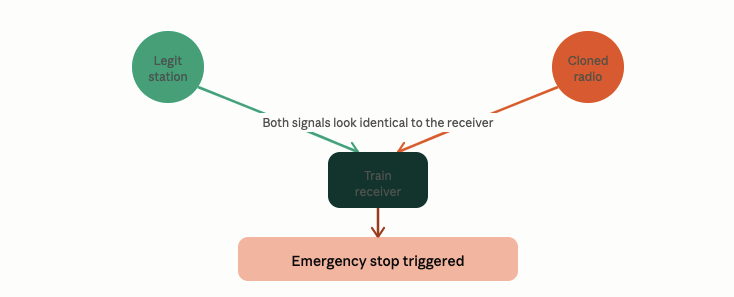
The mechanics were almost disarmingly simple. The Taiwan High-Speed Rail Corporation's trains, like emergency services and transit systems worldwide, communicate over TETRA, a radio standard developed in the 1980s and 1990s and still the default backbone for mission-critical voice and signalling in dozens of countries. Using a software-defined radio, the student — identified only by his surname, Lin — intercepted and decoded the parameters of THSRC's TETRA transmissions, then reverse-engineered them well enough to program identical parameters into a handheld radio. From there, cloning a legitimate broadcast was trivial: he transmitted a general emergency alarm, the highest-priority message in the system's safety protocol, and the network obeyed exactly as designed. Three trains stopped instantly; a fourth followed shortly after. Investigators would later determine the total disruption ran to 48 minutes and delayed hundreds of holiday travellers — a modest human toll set against a stark technical one.

What makes the incident geopolitically significant is not the perpetrator but the precedent. Taiwan sits five minutes by missile from an adversary that has spent years developing exactly the kind of prepositioning capability this incident inadvertently demonstrated is unnecessary. If a radio enthusiast working alone can trigger a general emergency stop on a national rail network, the sophistication bar for a state actor seeking to achieve the same effect — deniably, and at a moment of its choosing — is lower than most defensive planning has assumed. TETRA's vulnerabilities are not new; researchers disclosed structural weaknesses in the standard back in 2023, and an accelerated hardening effort has followed. But the installed base is old, over-the-air updates are frequently absent, and replacing radio infrastructure sits, as it typically does across public services, near the bottom of every budget list. Taiwan's transport ministry has now pledged to harden THSRC's communications, but the more consequential fact is structural rather than local: TETRA's exposure is a global one, inherited by any state or operator that adopted the standard decades ago and never fully modernised it.
The incident also illustrates a pattern this publication has tracked across sectors — that the line between criminal, hacktivist, and state-capable disruption is dissolving not because criminals are becoming more sophisticated, but because the infrastructure itself has become easier to reach. A lone actor with commodity tools and a few weeks of study achieved what analysts have long treated as a hallmark of state-level threat modelling: the ability to interrupt a national transport system on demand. For Taiwan, and for the many countries still running TETRA-dependent rail, aviation, and emergency networks, that should read less as a curiosity and more as an early warning shot.