The Whole Pipeline: How Breached Data Becomes Cash, Leverage, and Sextortion Material- 306

August 13, 2026
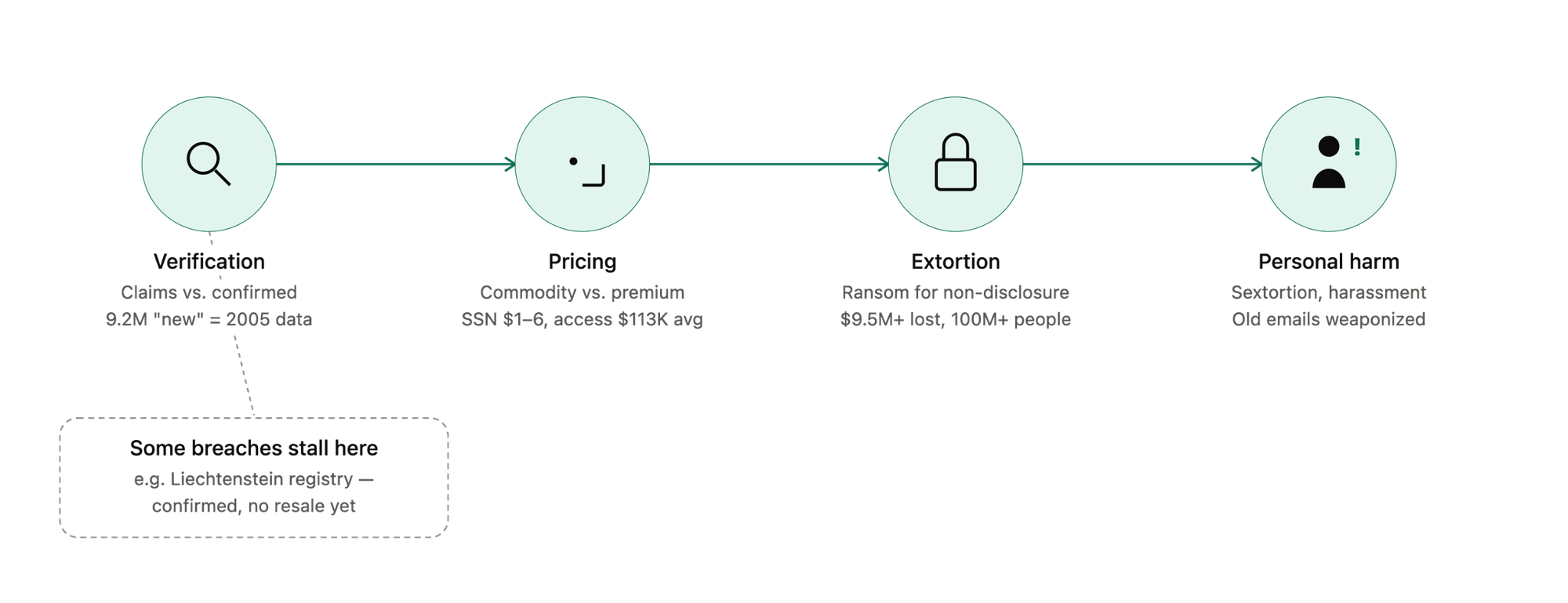
A data breach is usually reported as a single event — a company discloses an intrusion, a number of affected individuals is announced, the story ends. Nine cases surfacing across a single reporting window make clear that the disclosure is really only the entry point into a much longer supply chain, one with its own marketplace, its own pricing structure, its own criminal specializations, and its own final destination in the lives of ordinary people. Stolen data moves through distinguishable stages on its way from a compromised network to a criminal's bank account: it first has to be sorted from the exaggerated and the outright recycled, then it gets priced according to what it can actually do, then it gets weaponized directly against the organizations it was taken from, and finally, in its most personal form, it ends up as leverage against individuals who never had any relationship with the breached company at all.
The first stage is the one defenders are worst equipped to handle, because it requires distinguishing a genuine breach from a marketing claim before any of the more serious analysis can begin. Researchers at StealthMole spent months tracing a persona calling itself ModernStealer across dark web forums and Telegram, advertising alleged government, military, and nuclear material — a supposed Türkiye-Pakistan drone-partnership document, a claimed Pakistan Nuclear Regulatory Authority database, listings naming Pakistani and Bangladeshi military bodies and US defense organizations. None of it was confirmed as an actual intrusion; the investigation's real achievement was tracing a durable Session messaging identifier and a Telegram handle, Sassoon Don, across dozens of listings and at least one additional persona, Zu1f1q4r, establishing an operational overlap between accounts without ever proving they were a single operator — a distinction the researchers were careful to preserve rather than collapse into a tidier but less honest conclusion. Bank of Baroda's disclosure shows the same verification problem from the victim's side: after a Dark Web researcher publicized an alleged 1-terabyte dump of Indian banking records, the bank confirmed only that a single employee's email account had been compromised and used to access unspecified data, explicitly stating its core banking systems were untouched — while independent metadata analysis put the actual archive closer to 700 gigabytes, and the number of affected customers, variously alleged at 100,000 to 300,000, remains unconfirmed by the bank itself. The most instructive case of all involves data that was never falsely claimed to exist — it simply wasn't new. A seller advertising 9.2 million records as Israel's current national population registry had, on forensic inspection by Ransomnews, offered a file in which every date field — births, deaths, immigration, record updates — stopped cold in 2005, an unmistakable match for "Agron 2006," a stolen registry copy that has circulated since a Ministry of Social Affairs employee took it home two decades ago. The seller, a reputation-heavy vendor whose entire catalogue consists of repackaged national databases from half a dozen countries, wasn't lying about possessing genuine data — he was relying on the fact that a real, permanent national ID number doesn't stop being useful for fraud just because the file describing it is twenty years old.
Once a batch of data clears that verification hurdle, or simply enters circulation regardless, it enters a pricing structure that DarkOwl's research shows has split sharply in two directions at once. At the commodity end, abundance has collapsed prices to near-nothing: a Social Security number sells for $1 to $6, a name-and-email pair for under $15, a full identity package for $20 to $100, a working payment card for $10 to $40 — pricing that reflects a market so flooded with 2.86 billion compromised credentials in 2025 alone that a correct username and password can no longer function as proof of anything. Two categories buck that collapse specifically because they resist commoditization: healthcare records, which cannot simply be cancelled and reissued the way a credit card can, hold steady around $250 to $310, and stolen session cookies — the small files that keep a user logged in after authentication — carry a premium because they let an attacker replay an already-approved session and step around a password prompt and multi-factor authentication check entirely, rather than needing to defeat either. At the opposite end of the market, verified access into a specific, valuable organization has become the actual scarce commodity: average listings for initial access to enterprise networks rose from roughly $2,726 in 2024 to $113,275 in 2025, a jump DarkOwl attributes to a small number of listings for exceptionally high-revenue targets rather than a uniform market shift — but the direction of travel is unambiguous. Bulk, undifferentiated dumps are becoming worthless at the exact moment that curated, verified, ready-to-use access is becoming the market's most expensive product.
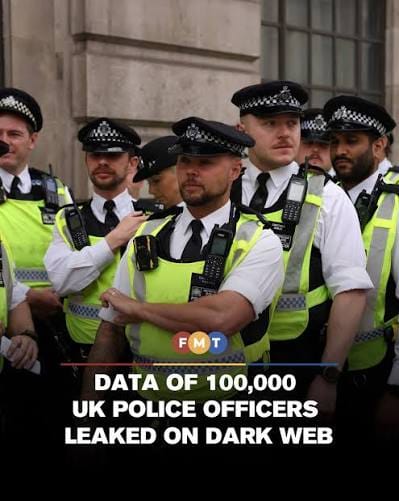
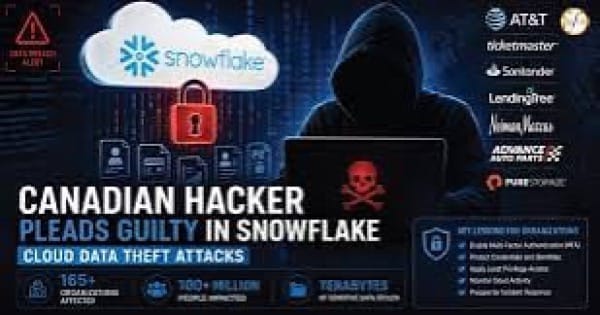
That gap between worthless bulk data and expensive verified access is precisely what a criminal can close through direct extortion rather than resale, and two prosecuted or actively ransomed cases show what that looks like in practice. Connor Riley Moucka, a 26-year-old Canadian who pleaded guilty this month, ran perhaps the clearest full-cycle demonstration of this entire pipeline in a single operation: using credentials harvested by infostealer malware against Snowflake customer accounts that had never enabled multi-factor authentication, he and a co-defendant accessed cloud storage at more than 165 organizations, including AT&T, Ticketmaster, Santander, and Neiman Marcus, and extracted terabytes of data affecting more than 100 million individuals. Moucka then worked both ends of the market simultaneously — extorting at least $2.5 million in Bitcoin directly from victim companies, while separately selling stolen data on hacker forums for at least $495,000 in ordinary currency — and in one case re-extorted a victim a second time, using the stolen personal data of a government official's family members specifically to increase the pressure. US prosecutors put total victim losses above $9.5 million. A more modest but structurally identical case involves the UK's Police National Legal Database, breached by a group calling itself ExfilSquad, which claims to have stolen contact records for around 135,000 police officers, criminal justice staff, and members of the public who used the service's question-answering site — and, in the pattern that defines extortion rather than simple theft, is now demanding payment specifically to prevent the release of the rest. No passwords or victim, witness, or offender data were involved, but the ransom demand itself is the tell: the value of the stolen data here lies less in what a buyer would pay for it than in what the victim organization will pay to keep it from becoming public.
The final stage of the pipeline is where this economy stops being an abstraction about corporate data and becomes a direct, personal threat, and two cases show it operating through entirely different mechanisms toward the same outcome. A sextortion campaign identified this year demanded $2,000 in Bitcoin from recipients, falsely claiming the well-known ShinyHunters group had compromised their devices, accessed their camera and microphone, and recorded them visiting adult websites — a threat with no technical basis whatsoever, built entirely on email addresses harvested from years-old, unrelated breaches at companies including Amtrak, Hallmark, Betterment, and Panera Bread, weaponized by criminals with no connection to the original intrusions and no actual access to anything. The FBI's parallel alert describes a version of the same threat with real technical teeth behind it: hackers using credential-stuffing against leaked password lists, impersonating platform support staff to trick victims into resetting their own passwords, and cloning login pages to harvest credentials directly, all aimed at stealing explicit content from the social media accounts of adults and children alike, then selling that material on criminal marketplaces or using it to drive exactly the same sextortion, harassment, and stalking the fraudulent ShinyHunters emails only pretended to threaten — a pattern the Bureau ties to prior prosecutions including a campaign against roughly 600 women's Snapchat accounts and a former university coach who mined 150,000 student athletes' medical records specifically to break into female athletes' social media. Between them, these two cases show that both a real technical compromise and a complete bluff built on old leaked emails converge on the identical endpoint — because once a threat actor has a name, an email address, and a plausible-sounding claim, the actual presence or absence of real leverage barely changes what the message says or how frightening it reads to the person receiving it.
Liechtenstein's Register of Beneficial Owners, compromised for two days in late July and now under investigation by a government crisis unit, sits at an earlier point in this same pipeline than any of the other cases here — 31,000 entities' ownership records were confirmed exfiltrated, but no ransom demand, marketplace listing, or resale has yet surfaced connected to it. That absence is itself worth noting rather than treating as reassurance: beneficial-ownership data exists specifically to prevent money laundering and financial-crime concealment, which makes it exactly the kind of high-value material the pricing structure described above would reward, and the gap between a confirmed breach and its appearance on a criminal marketplace has, in several of the cases here, run to months or years rather than days. Considered together, these nine cases describe a single continuous economy rather than nine unrelated incidents: data has to survive a verification gauntlet built on exaggeration and recycling, gets priced according to a logic that makes commodity information worthless and curated access extraordinarily valuable, gets converted directly into extortion payments when resale alone isn't profitable enough, and eventually, in its most durable and most personal form, resurfaces years after the original breach as the raw material for threatening a stranger with the destruction of their own reputation.
Update, 17 October 2026. A campaign surfacing in mid-August shows where that premium on enterprise access leads. A threat actor using the name “TheHatman” flooded cybercrime forums with full internal employee directories belonging to several Fortune 500 companies, among them McDonald’s, Vodafone and Kyndryl, across IT services, hospitality, telecommunications, retail and logistics, claiming they were downloaded directly from the firms’ Azure and Entra tenants “using compromised credentials.” Hudson Rock judged the samples authentic, since their corporate addresses and field names match standard Azure directory exports, and found stolen Azure credentials from infostealer infections linked to most of the affected companies, a pattern pointing to targeted exploitation of harvested logins rather than any flaw in Azure itself. The intrusion vector remains unconfirmed, but the payoff is clear: by exposing reporting lines, job titles, service accounts and the names of global administrators, the dumps hand attackers a ready-made map for business email compromise, convincing spear-phishing, and privilege escalation, the raw material from which the next stage of the pipeline is built.