Escalating Cyber and Cyber-Physical Risk to U.S. and Allied Infrastructure Amid Iran-Linked Conflict Dynamics- 149
April 21, 2026
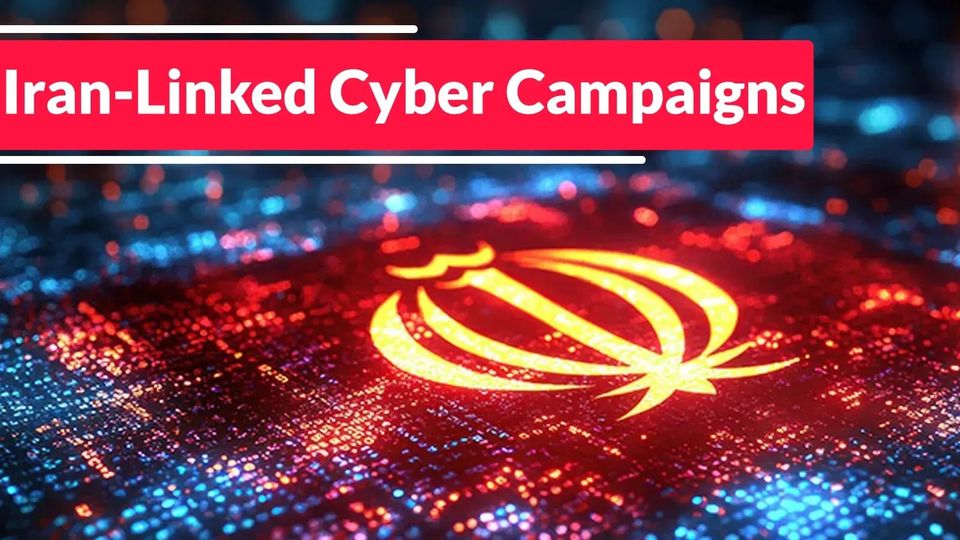
Cyber and cyber-physical activity associated with the escalating confrontation involving the United States, Israel, and Iran is no longer prospective and is already producing observable operational effects. Available indicators suggest Iranian-aligned actors are moving early to establish access, signal intent, and impose selective disruption across civilian, commercial, and critical infrastructure targets, consistent with Tehran’s long-standing preference for asymmetric escalation below the threshold of open conflict. U.S. authorities assess that the threat environment is intensifying. The Cybersecurity and Infrastructure Security Agency (CISA) has warned that Iran-linked hackers are actively targeting U.S. water and energy sectors by exploiting internet-facing operational technology (OT) systems. These systems directly control physical processes, elevating the risk of real-world consequences such as power outages, manufacturing shutdowns, and potential water contamination. Current activity includes attacks against Allen-Bradley programmable logic controllers manufactured by Rockwell Automation, with U.S. authorities cautioning that controllers from other vendors may also be under reconnaissance or active exploitation. This activity is occurring despite the fact that advanced AI-enabled vulnerability discovery and exploit-generation capabilities—such as those associated with emerging Mythos-class models—are not yet widely available to threat actors. This suggests that existing Iranian capabilities are already sufficient to generate disruptive cyber-physical effects, and that risk will likely increase as more advanced tooling proliferates. Parallel to critical infrastructure targeting, U.S. and allied commercial entities are beginning to experience direct impacts. Iranian state-linked media recently published a list of major U.S. technology companies portrayed as legitimate targets in the conflict, a move assessed as both psychological signaling and preconditioning for follow-on cyber operations. In a concrete incident, a pro-Iranian hacking group claimed responsibility for a cyberattack against U.S.-based medical technology firm Stryker, an intrusion that has left the company’s online ordering systems offline for more than a week, demonstrating sustained operational impact rather than short-lived disruption. Activity is not confined to the U.S. homeland. Poland’s government disclosed that it disrupted a cyberattack— potentially linked to Iran—targeting one of its nuclear research facilities, underscoring the broader geographic scope of Iranian-aligned cyber operations and their focus on sensitive strategic sectors.
Iran’s cyber posture is assessed as particularly dangerous due to its unpredictability, scale of preparation, and reliance on indirect execution. Iranian actors are known to pre-position access months or even years in advance of geopolitical escalation. Technical reporting from researchers at Symantec and Carbon Black indicates that Iranian hackers implanted backdoors across multiple U.S. corporate networks as early as late February, strongly suggesting deliberate groundwork for future operations.
Like Russia, Iran frequently employs proxy actors— including hacktivist collectives and ransomware groups—to conduct operations, complicating attribution and limiting the effectiveness of traditional response mechanisms such as sanctions, indictments, or diplomatic pressure. In the current conflict, Russian-linked hacktivist elements appear to be aligning tactically with Iranian objectives, with alleged targeting of Israeli critical infrastructure. Separately, a pro-Iran group known as Ababil of Minab claimed responsibility for a cyberattack against the Los Angeles County Metro, reinforcing concerns about attacks on high-visibility public services. Private-sector intelligence assessments reinforce the expectation of sustained disruption. Analysts at Gartner assess that organizations are likely to face ransomware campaigns, third-party supply chain compromise, and direct attacks on cyber-physical systems. Gartner recommends that security leaders urgently map supply chains, inventory IoT and OT assets, and coordinate with executive leadership to define mission-critical priorities under cyber disruption scenarios. Echoing this assessment, Justin Rude of Flashpoint warns that organizations should prepare for prolonged volatility affecting both digital infrastructure and supply chains. In parallel with intrusion activity, influence operations are expanding as a complementary line of effort. Advances in artificial intelligence have significantly reduced the cost and complexity of generating persuasive synthetic media and managing large-scale bot networks. U.S. President Donald Trump has publicly accused Iran of using AI as a disinformation weapon in the conflict, alleging coordination with Western media outlets, though without presenting supporting evidence. Regardless, the information environment is demonstrably saturated. An investigation by The New York Times identified more than 110 AI-generated images and videos related to the war circulating across TikTok, Facebook, X, and private messaging platforms, collectively reaching millions of viewers in a matter of weeks. Overall, the conflict remains in an early phase, but the trajectory is clear. Iranian cyber and information operations are already active, multi-vector, and deliberately ambiguous, targeting critical infrastructure, commercial entities, allied states, and public perception simultaneously. U.S. companies and infrastructure operators face a rising probability of both disruptive and destructive cyber activity as geopolitical escalation continues, particularly where legacy systems, exposed OT environments, and third-party dependencies remain insufficiently secured.
Download the Full Report (pdf)