Dubai Scam Network Takedown Signals Emerging U.S.-China Convergence Against Transnational Cyber Fraud- 159

April 30, 2026
The dismantling of multiple scam compounds in Dubai marks more than a large-scale anti-fraud operation; it reflects the growing recognition that cyber-enabled financial crime has evolved into a strategic transnational security challenge. The joint involvement of U.S., Chinese, Emirati, and Thai authorities illustrates a rare alignment of interests between geopolitical competitors confronting increasingly industrialized criminal ecosystems built around cryptocurrency fraud, online deception, and illicit financial networks.
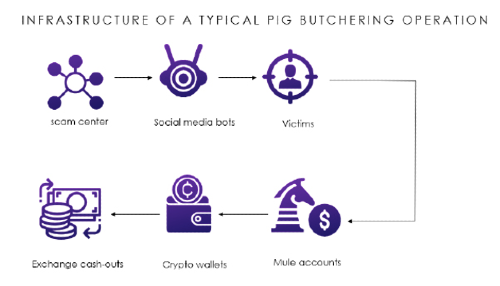
Far from isolated online scams, the targeted infrastructure appears linked to the broader “pig butchering” model, where victims are psychologically manipulated through digital relationships before being funneled into fraudulent investment platforms. The operation highlights how modern scam centers now function as complex criminal enterprises combining cyber fraud, money laundering, encrypted communications, recruitment pipelines, and in some cases coercive labor and human trafficking mechanisms.
The Dubai raids also underscore the growing strategic importance of global financial and logistics hubs in the cybercrime landscape. As ransomware, crypto fraud, and transnational scam operations become increasingly interconnected, governments are beginning to treat these networks not simply as law enforcement concerns but as components of a wider underground economic system capable of destabilizing financial security across multiple regions simultaneously.
The reported operation in Dubai is significant less because of the number of arrests and more because it represents a rare convergence of U.S. and Chinese law enforcement interests in the cybercrime domain. According to the U.S. Department of Justice, the operation involved the FBI, Dubai Police under the UAE Ministry of Interior, China’s Ministry of Public Security, and the Royal Thai Police. Authorities arrested at least 276 suspects and dismantled nine scam centers allegedly linked to cryptocurrency investment fraud targeting U.S. victims.
At the operational level, the scam infrastructure appears tied to the broader “pig butchering” ecosystem, where victims are gradually manipulated through online relationships before being pushed into fraudulent crypto investment platforms. Investigators linked the network to entities identified as “Ko Thet Company,” “Sanduo Group,” and “Giant Company,” which allegedly managed recruitment, operations, and financial laundering activities across multiple jurisdictions.
One of the most notable aspects is the geopolitical dimension. Cybersecurity and intelligence cooperation between Washington and Beijing remains extremely limited due to ongoing disputes over cyber espionage, intellectual property theft, and state-linked hacking operations. The Dubai takedown therefore reflects a selective overlap of interests rather than a broader strategic rapprochement. Both countries increasingly view transnational scam compounds as destabilizing criminal ecosystems that combine cyber fraud, money laundering, cryptocurrency abuse, and human trafficking.
The operation also highlights the evolution of scam centers into industrialized fraud infrastructures. These networks increasingly resemble hybrid criminal enterprises rather than isolated call-center scams. They combine social engineering, encrypted communications, crypto laundering pipelines, fraudulent trading platforms, recruitment operations, and coercive labor systems. Research and law enforcement reporting indicate that many such centers rely on trafficked workers who are lured through fake job offers and then forced to conduct online fraud under threats and violence.
Another important element is the role of Dubai and the UAE as a logistics and financial hub. The city’s international connectivity, large expatriate population, financial infrastructure, and proximity to Asian and African markets make it attractive not only for legitimate business but also for transnational illicit finance networks. The fact that Dubai Police led the operational side of the raids suggests increasing Gulf involvement in international cybercrime enforcement cooperation.
The FBI stated that the investigation began after numerous complaints from American victims who collectively lost millions of dollars through fraudulent crypto investment schemes. Authorities also noted that the broader anti-scam initiative known as “Operation Level Up” has already warned thousands of potential victims and reportedly prevented hundreds of millions of dollars in additional losses.
Strategically, the operation reflects a broader trend: cyber-enabled financial fraud is increasingly being treated not merely as criminal activity but as a transnational security issue. Scam compounds operating across Southeast Asia, the Gulf, and parts of Africa are now viewed as interconnected ecosystems involving organized crime, underground financial networks, corruption, human trafficking, and digital infrastructure abuse. This is pushing governments that normally compete in cyberspace to cooperate tactically against mutually disruptive criminal networks.