Four years in, Russia's propaganda machine turns back toward its old targets- 287
July 3, 2026
Four years into its invasion of Ukraine, Russia's influence-operations apparatus is shifting its center of gravity back to where it spent most of the years before the war: the United States and Europe. According to a new Google Threat Intelligence report, the shift signals that Moscow, having spent the invasion refining its psychological-manipulation playbook against Ukraine, is now redirecting that sharpened capability toward undermining political stability and unity within Western democracies and the alliance structures — the EU and NATO — that support them.
Google's threat hunters, James Sadowski and Alden Wahlstrom, frame this as more than a simple return to old habits. The years fighting in and around Ukraine functioned as a testing ground: campaign techniques, narrative tactics, and increasingly the use of artificial intelligence for planning, reconnaissance, and content generation were all refined under wartime pressure, and Russia now appears to be exporting that refined capability back to its historically preferred targets, with researchers warning that pro-Russia influence activity aimed at the EU and NATO specifically may intensify from here.
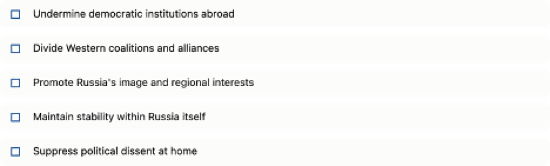
The researchers identify five core objectives running through these campaigns, all ultimately in service of the Kremlin's military and political goals through psychological manipulation: undermining democratic institutions in target countries, dividing Western coalitions and alliances, promoting Russia's international image and regional interests, maintaining stability within Russia itself, and suppressing political dissent domestically. Notably, that list spans both offense abroad and defense at home — the same influence machinery serves to destabilize adversaries and to shore up the Kremlin's own position internally.
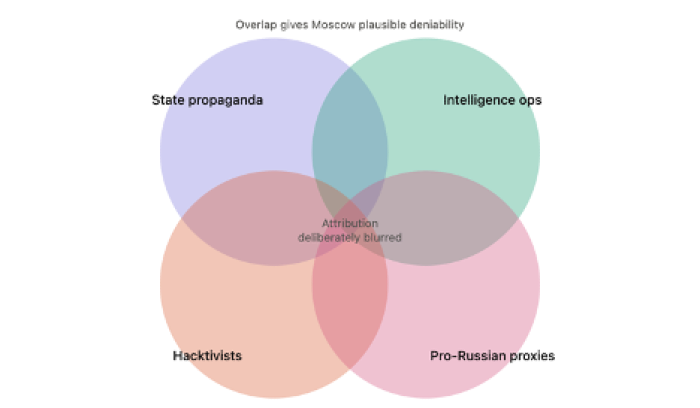
Tactically, the campaigns run through familiar channels — fake news websites publishing fabricated political commentary, and direct messaging spreading pro-Russian narratives — but Google's researchers note these influence efforts frequently run in parallel with more destructive activity: data-wiping malware, hack-and-leak operations, and direct cyberespionage often accompany the narrative campaigns rather than standing apart from them. The ecosystem behind all of this deliberately spans a wide range of actors, from official state propaganda organs and covert intelligence services to hacktivist groups and pro-Russian proxies — and the boundaries between these categories are kept intentionally blurred, which both complicates attribution for defenders and gives Moscow a layer of plausible deniability over activity that may in fact be state-directed.