Securing the South: How Cyber Strategy Is Reshaping the Negev’s Future

November 26, 2025
Israel’s Negev region is emerging as a strategic frontier for national cyber development, seen as a core lever to reverse the region’s chronic brain drain and to build a sustainable, high-value digital economy outside the country’s traditional tech hubs. The relocation of major state cyber institutions, the creation of integrated cybersecurity campuses, and new education-to-employment pipelines are transforming Be’er Sheva into a national security and innovation anchor. By aligning academic programs, military units, private companies, and local authorities within a single regional ecosystem, Israel aims to produce a stable cyber workforce, reduce talent attrition, and stimulate long-term socio-economic resilience across the Negev.
Israel’s cybersecurity sector is evolving from a concentrated technological enclave into a decisive instrument for reshaping the national geography of power. The recent argument emerging from the Negev — framed around the need to halt chronic brain drain — gains strategic weight at a moment when Israel’s defense-technology ecosystem has expanded under wartime pressure and demonstrated extraordinary operational relevance. Cyber, which already forms the backbone of national resilience, is increasingly positioned as a tool not only of protection but of territorial transformation. The Negev, historically peripheral and underdeveloped compared with the Tel Aviv corridor, is now the focal point of a broader strategy that seeks to redistribute innovation capacity, draw talent southward, and create a second national pole for high-value knowledge production.
The roots of this concept lie in a decade-long experiment around Beersheba, where academic institutions, military cyber units, national cyber authorities, and a cluster of private companies were intentionally co-located. This deliberate proximity created the architecture of a cyber ecosystem in a region that had long suffered from weak economic gravity. What was once a remote idea — turning the Negev into a technological hub — has progressively matured, strengthened by successive waves of state investment and the rising global demand for cybersecurity capabilities. What the war and recent upticks in cyber operations revealed is that Israel’s cyber-defense and offensive capacity is not only robust but exportable. This makes the timing ideal for a major structural shift: instead of concentrating talent in central Israel, policymakers and industry strategists see an opportunity to anchor the next phase of the cyber revolution in the periphery.
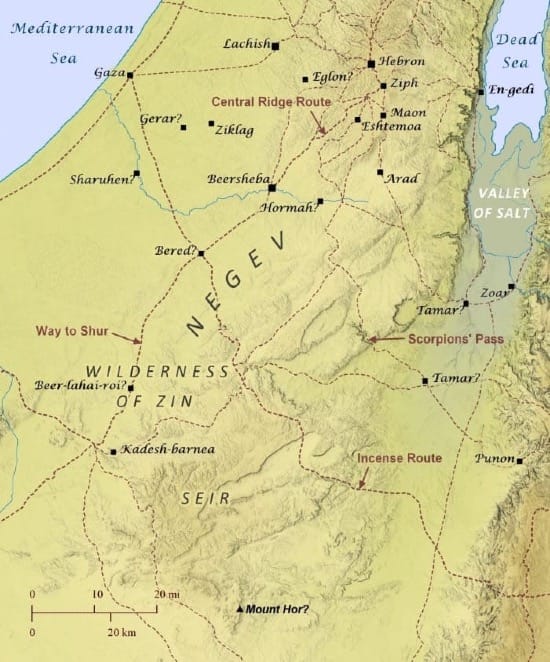
The core argument rests on talent retention. For decades, young professionals from the south have migrated to Tel Aviv, Haifa, and the central districts in search of higher salaries, better infrastructure, and denser innovation environments. Cybersecurity, because of its high entry barriers, global competitiveness, and close ties to defense institutions, offers a solution that is both economic and strategic. A strong cyber ecosystem in the Negev would absorb local graduates, stimulate high-skill employment, attract foreign investment, and create a self-sustaining innovation loop in a region historically dependent on state subsidies. The potential gravitational pull of such a cluster is strong: startups, applied research centers, joint civilian-military laboratories, and global cyber contractors all follow talent, and talent follows opportunity, critical mass, and institutional credibility — all of which Israel is capable of generating.
Yet the strategy depends on assumptions that require scrutiny. Infrastructure must evolve quickly enough to support a growing professional population, which requires housing, transport links, cultural amenities, and social services that can compete with the central region. The coexistence of military, civilian, and academic cyber institutions — while a strength on paper — can tilt the ecosystem too far toward the security establishment, potentially limiting its attractiveness to global civilian firms or entrepreneurs seeking a less securitized environment. The vision also assumes that cybersecurity alone can reverse migratory patterns shaped by socio-economic divides, national identity dynamics, and longstanding geographic inequalities. Cyber is a powerful engine, but it cannot be the sole driver of regional transformation unless embedded in broader planning.
Still, the strategic payoff is significant. A thriving cyber hub in the Negev would diversify the geography of national resilience, dispersing critical expertise rather than concentrating it in a narrow corridor vulnerable to physical, economic, or demographic pressures. It would strengthen Israel’s long-term strategic posture by widening the national center of gravity for innovation. It would also send a clear message: the periphery is no longer a marginal space but a strategic frontier — not of agriculture, not of settlement, but of high-technology knowledge production. For a country that has long struggled to reconcile national security imperatives with balanced territorial development, the cyber sector provides a rare alignment between security logic and socio-economic imperatives. If the momentum is sustained, cyber may become the first sector capable of rewriting the developmental map of southern Israel — turning a historically underdeveloped region into a strategic asset whose value lies in brains, innovation, and global relevance.