Ransomware Escalation in the United States: Insider Threats, Expanding Actor Ecosystem, and Critical Infrastructure Exposure

November 18, 2025
The current ransomware landscape in the United States is undergoing a rapid and disruptive shift. Attack volumes are rising sharply, fueled by an expanding ecosystem of threat actors, increasingly opportunistic insider involvement, and a growing focus on critical infrastructure operators. Recent incidents across industry sectors—from medical devices to energy providers—reveal how ransomware groups are combining targeted intrusions, advanced evasion techniques, and aggressive extortion models to pressure U.S. organizations. The following synthesis examines the main operational trends shaping this environment, drawing from a series of recent attacks that illustrate the scale, sophistication, and strategic implications of the threat.
RANSOMWARE PRESSURE ACROSS THE UNITED STATES: RISING GROUP ACTIVITY, INSIDER THREATS, AND CRITICAL INFRASTRUCTURE BREACHES
The ransomware landscape in the United States is entering a phase of intense escalation, with 2023–2024 marked by a sharp rise in organizational targeting, internal compromise, and strategic attacks on critical sectors. Recent reporting indicates a 56% increase in cyberattacks against American firms, driven by an enlarged ecosystem of 88 active ransomware groups simultaneously probing U.S. networks. The pressure extends from private industry to defense contractors and energy operators, shaping a threat environment where traditional protections are proving insufficient.
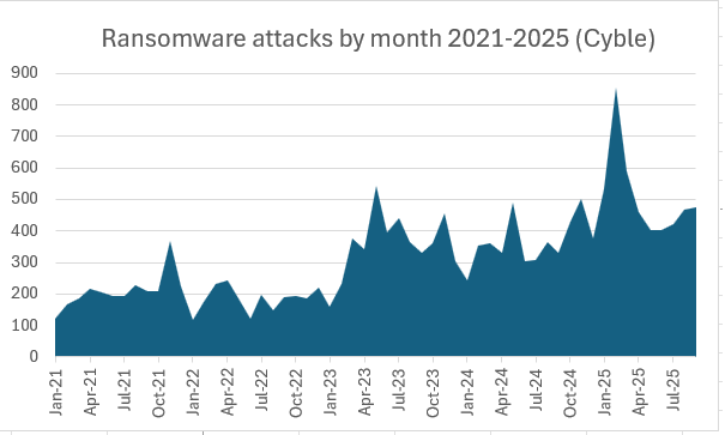
Escalation of Ransomware Activity Against U.S. Firms
The surge in ransomware incidents is tied to a diversification of actors and techniques. With 88 groups carrying out campaigns across the United States, the volume of attacks has reached levels that strain national cyber resilience. Firms across sectors—engineering, medical devices, oil and gas, defense, and services—are reporting increasingly sophisticated infiltration attempts leveraging both classic vectors like phishing and newer methods exploiting unpatched vulnerabilities and widely circulated CVEs.
Financial impacts are severe. Ransom demands now routinely reach hundreds of thousands of dollars, with some exceeding several million. Companies face operational paralysis, data theft, and reputational damage as extortion techniques evolve toward double and triple extortion models.
The growth of this ecosystem coincides with heightened scrutiny of state-linked threat actors thought to be enabling or sheltering these groups. Analysts note stronger correlations between global geopolitical tensions and ransomware activity, indicating that some operations may be indirectly aligned with foreign strategic interests.
Insider Threats and the BlackCat/ALPHV Case
A notable shift in the U.S. ransomware threat profile is the rise of insider-enabled attacks. The indictment of three former cybersecurity professionals behind BlackCat ransomware incidents in 2023 demonstrates how internal expertise can be weaponized. Between May and November 2023, these insiders attempted to extort five U.S. companies, exploiting privileged understanding of defensive systems.
BlackCat’s sophistication amplified the impact of these breaches. One victim—a medical device company—paid nearly $1.3 million in cryptocurrency after attackers threatened operational shutdowns and exposure of sensitive data. The case underscores vulnerabilities in hiring practices, employee vetting, and access control within the cybersecurity industry itself.
Legal consequences for the three defendants, who face up to 50 years in prison, may set a new baseline for judicial responses to insider-assisted ransomware campaigns. At the same time, the incident is prompting organizations to reassess insider risk management, threat intelligence integration, and internal monitoring practices.
Critical Infrastructure Under Pressure: The Mack Energy Incident
The attack on Mack Energy in March 2023 illustrates the growing threat to U.S. critical infrastructure providers. The Cicada3301 group executed a targeted, multi-stage intrusion that bypassed the company’s Endpoint Detection and Response (EDR) solutions. The breach disrupted operations and revealed systemic weaknesses in traditional defensive layers.
Cicada3301 combined encryption with data exfiltration to maximize leverage, obtaining sensitive operational data while locking down core systems. Forensic analysis revealed that the adversary exploited gaps in Mack Energy’s security architecture, demonstrating that modern ransomware campaigns are increasingly designed to evade behavioral analytics and layered defenses.
The attack led to extensive operational downtime, regulatory scrutiny, and internal restructuring. Mack Energy was compelled to overhaul its cybersecurity posture, adopting a prevention-first model and integrating deeper threat intelligence feeds, continuous monitoring, and improved segmentation.
The event highlights the fragility of energy-sector networks and the cascading risks posed to national supply chains when critical operators are compromised. It also reignited industry-wide discussions on the limitations of current EDR tools against adaptive, targeted threat actors.
Strategic Lessons Across the U.S. Attack Surface
The trends emerging from these incidents create a unified picture of a U.S. ransomware landscape evolving along three parallel axes:
• Volume and Diversity of Threat Actors – With 88 active groups, attack frequency is saturating defensive capacity across sectors.
• Insider-Enabled Ransomware – Cybersecurity-trained insiders now represent a viable attack vector, complicating traditional detection models.
• Pressure on Critical Infrastructure – Energy, healthcare, and defense supply-chain entities are experiencing targeted, multi-layered intrusions designed for both disruption and intelligence collection.
Across all cases, a common theme emerges: traditional reactive defenses—EDR, signature-based detections, after-the-fact incident response—are falling behind the sophistication and volume of modern ransomware operations. U.S. companies are increasingly required to adopt proactive, intelligence-driven approaches, aligning with government frameworks and enhancing collaboration with federal agencies.
The intensifying campaigns across the United States illustrate a maturing ransomware ecosystem that blends criminal profit motives with strategic exploitation of critical sectors. As adversaries refine their methods and expand their toolkits, firms are facing a landscape where rapid adaptation and continuous vigilance have become existential requirements.