Qilin Ransomware: Escalating Attacks on Critical Infrastructure and Finance
November 27, 2025
Ransomware has evolved into one of the most disruptive forms of cybercrime, no longer confined to isolated corporate breaches but increasingly aimed at the systems societies depend on every day. The Qilin ransomware gang exemplifies this shift. Operating as a ransomware‑as‑a‑service (RaaS) network, Qilin has expanded its reach from hospitals and schools to streaming platforms and, most recently, financial institutions in South Korea.
This report examines Qilin’s campaign as a case study in how ransomware groups exploit societal pressure points—healthcare, education, media, and finance—to maximize leverage and destabilize trust in digital infrastructure. By combining double extortion tactics with supply chain compromises, Qilin demonstrates how modern ransomware operations blend criminal profit motives with geopolitical impact.
The following sections provide a timeline of major incidents, a sectoral risk matrix, and an analysis of the strategic implications of Qilin’s operations, highlighting why ransomware is no longer just a technical threat but a systemic risk to public safety, economic stability, and national resilience.
The group, identified as Russian-speaking and financially motivated, has evolved from underground ransomware distribution into a coordinated threat actor capable of crippling vital public services. Its operations span multiple continents, with confirmed attacks on hospitals in South London, a prestigious cancer clinic in Japan, and streaming servers used by media and educational institutions. These incidents reflect a strategic pivot: Qilin is no longer just encrypting data—it’s disrupting life-critical systems.
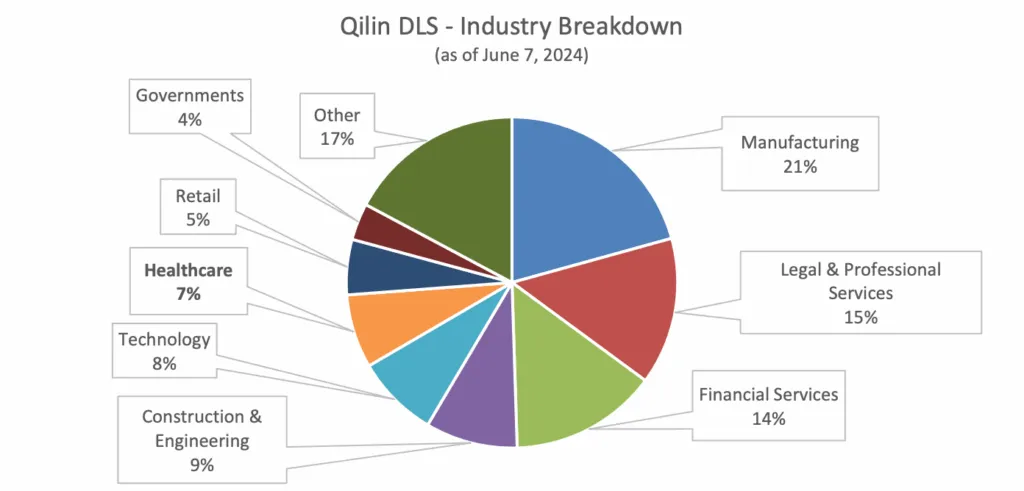
In June 2024, Qilin was linked to a devastating cyberattack on Synnovis, a diagnostics partner of the UK’s National Health Service (NHS). The breach disrupted pathology services across several hospitals, forcing emergency protocols and delaying patient care. Investigators traced the intrusion to a phishing campaign that delivered ransomware payloads with aggressive encryption and double extortion tactics—encrypting data while threatening to leak it if ransoms weren’t paid.
By February 2025, Qilin claimed responsibility for a breach at Utsunomiya Central Clinic in Japan, exposing sensitive health records of over 300,000 patients and rendering hospital systems unusable. The attack forced the clinic to disconnect from the internet and operate manually, underscoring the group’s capacity to paralyze healthcare infrastructure.
Qilin’s technical arsenal includes variants of the Agenda ransomware, originally written in Go and later ported to Rust for stealth and modularity. Analysts have noted code similarities with REvil, Black Basta, and BlackMatter, suggesting shared lineage or toolset evolution. Affiliates reportedly earn up to 85% of ransom payments, incentivizing rapid deployment and aggressive targeting.
The group’s expansion into streaming servers and educational networks signals a broader intent: to disrupt public-facing services, erode trust in digital infrastructure, and extract maximum leverage from visibility. These targets often lack hardened defenses, making them ideal for ransomware monetization and reputational damage.
Qilin’s campaign reflects a growing trend in ransomware operations—where disruption is as valuable as encryption. Their focus on healthcare, media, and education reveals a tactical understanding of societal pressure points, and their use of double extortion amplifies the psychological and operational impact.
Attacks on these servers can interrupt live broadcasts, degrade public trust, and expose subscriber data. Moreover, streaming platforms often rely on distributed cloud environments, making them susceptible to lateral movement and supply chain compromise.
Qilin’s operational model likely follows a ransomware-as-a-service (RaaS) structure, enabling affiliates to deploy payloads while central operators manage encryption keys and extortion logistics. The group’s use of double extortion—encrypting data and threatening public leaks—amplifies its psychological and reputational impact.
This threat actor’s focus on public-facing systems suggests a tactical understanding of visibility and leverage. By targeting institutions that serve large populations, Qilin maximizes disruption and forces rapid decision-making under pressure. Their campaigns are not just about financial gain—they are about destabilizing trust in digital infrastructure.
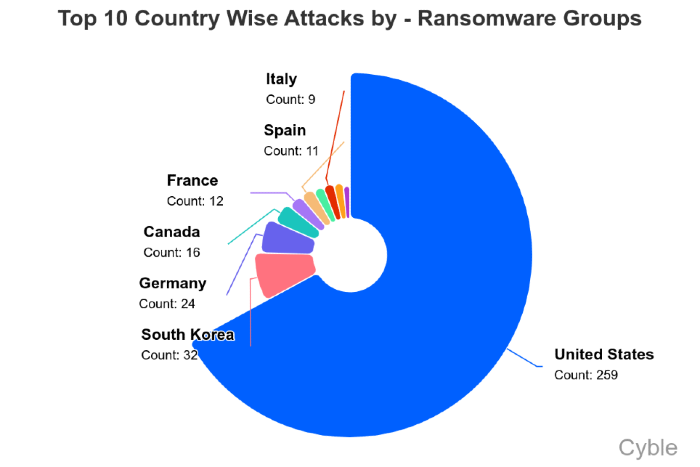
The South Korean campaign, dubbed “Korean Leaks”, represents the most ambitious phase yet. By compromising a managed service provider, Qilin gained access to multiple financial institutions simultaneously. At least 28 victims were confirmed, with over 1 million files and 2 terabytes of sensitive data exfiltrated. Payment systems, banking operations, and internal communications were disrupted, forcing emergency responses across the sector. For a country that had rarely been a ransomware hotspot, South Korea suddenly became the second most-targeted nation globally in late 2025, with 25 victims in a single month attributed entirely to Qilin.
Technically, the group relies on modular ransomware variants, including Agenda, ported into Rust for stealth and adaptability. Affiliates are incentivized with up to 85% of ransom payments, driving aggressive expansion. The campaign’s scale and precision have led some to suspect collaboration with state-linked actors, blending criminal profit motives with geopolitical intent.
Qilin’s strategy is clear: strike at sectors that cannot afford downtime, exploit societal pressure points, and amplify disruption through double extortion. Hospitals, schools, streaming platforms, and now financial institutions form a pattern of targeting where disruption itself is the weapon. The South Korean incident demonstrates how ransomware can destabilize not just data, but the confidence of entire populations in their digital infrastructure.
Qilin Ransomware – Sectoral Risk Matrix
| Incidents | Vulnerabilities | Impacts | Strategic Implication | |||||
Healthcare |
| - Reliance on digital diagnostics and patient records | - Delayed patient care | Creates immediate public pressure, forcing ransom negotiations under duress. | |||||
Education | Multiple schools targeted during exam cycles and enrollment periods (2025) | - Centralized student data systems | - Disruption of learning continuity | Exploits timing to maximize leverage, pushing schools toward rapid ransom payments. | |||||
Streaming | Streaming servers disrupted in 2025, interrupting broadcasts and exposing subscriber data | - Cloud-based distribution networks with weak segmentation | - Service outages | Amplifies visibility, eroding trust in digital media and civic communication platforms. | |||||
Finance (South Korea) | - “Korean Leaks” campaign (Sep–Oct 2025) | - Reliance on MSPs for centralized IT | - Banking operations disrupted | Financial disruption destabilizes economic confidence; possible hybrid collaboration with state-linked actors. |
Table capturing the sector-by-sector vulnerabilities, impacts, and strategic implications of Qilin’s campaign, showing how the group deliberately exploits societal pressure points.