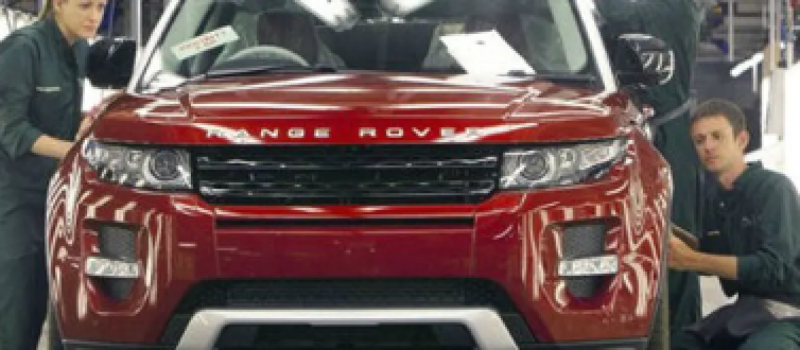
JLR cyberattack had a material impact on the UK's economy.

November 7, 2025
The United Kingdom is entering a new phase of economic vulnerability in which cyberattacks no longer represent isolated technical disruptions but tangible drivers of national-level financial instability. In late 2025, two high-profile incidents revealed the extent to which digital shocks can ripple through the real economy, undermining industrial output, retail performance, and GDP growth itself. The Bank of England’s acknowledgment that a cyberattack contributed to a nationwide slowdown marks a turning point: cybersecurity is no longer merely a corporate concern, but a macroeconomic variable. The attacks targeting Jaguar Land Rover and Marks & Spencer illustrate this shift with unprecedented clarity, demonstrating how a single breach can paralyze manufacturing, fracture supply chains, erode consumer confidence, and wipe out earnings across entire sectors. Together, these events suggest that the UK’s economic resilience is increasingly tethered to the robustness of its digital infrastructure—and that future crises may just as easily originate in cyberspace as in financial markets or global trade.
The Bank of England cited a September cyberattack on Jaguar Land Rover (JLR) as a contributor to the country's slowed GDP growth in Q3 2025. The Register notes that "[t]his is thought to be the first case in which a cyberattack has caused material economic and fiscal harm to the UK." The attack shut down production at JLR's factories and affected thousands of British companies across the supply chain. The company likely won't be fully operational until early next year, and analysts estimate that the attack could end up costing more than £2 billion (US$2.6 billion).
Separately, British retailer Marks & Spencer has disclosed that its profits in the first half of the year were nearly wiped out due to a cyberattack the company sustained in April, the BBC reports. The company's profits fell 99% from £391.9m to £3.4m in the first half of 2025 compared to 2024. M&S CEO Stuart Manchin said he expects profits to recover over the Christmas season, but warns that UK economic turmoil may worsen these results regardless. The BBC cites an analyst who pointed out a reassuring sign that M&S's core business of homewares and fashion only saw sales drop by about 16%.
.