Iranian APT-Enabled Missile Doctrine
November 20, 2025
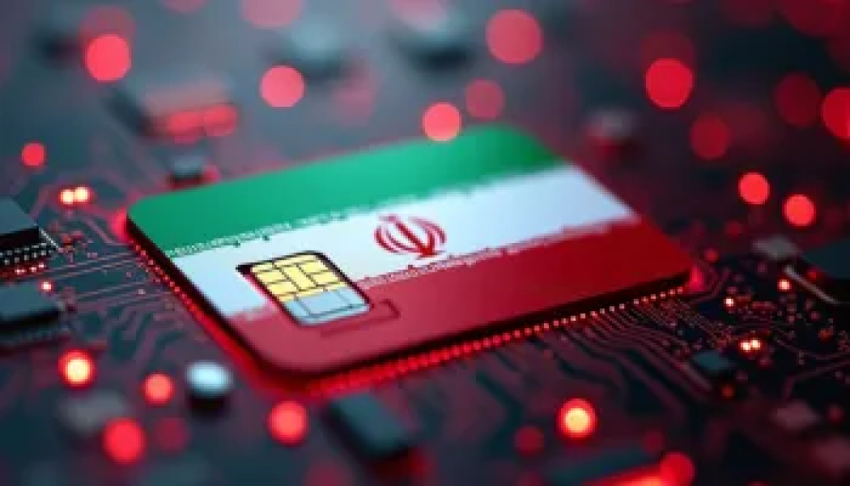
Iran’s integration of cyber capabilities into missile operations marks a pivotal shift in hybrid warfare doctrine. Advanced Persistent Threat units such as APT42 and UNC788 now serve as tactical enablers, infiltrating communications infrastructure to manipulate telemetry, extract targeting data, and support precision strikes. These operations—spanning Israeli networks and Red Sea maritime systems—demonstrate a fusion of cyber and kinetic force that redefines regional deterrence and battlefield dynamics.
Iranian Advanced Persistent Threat (APT) units have evolved into battlefield enablers, marking a doctrinal shift in Tehran’s hybrid warfare strategy. Groups such as APT42 and UNC788 now operate as digital force multipliers, embedding cyber capabilities directly into missile command-and-control workflows. This fusion of cyber and kinetic domains allows Iran to execute precision strikes, reroute naval assets, and shape regional conflict with minimal attribution risk.
These operations are not isolated. They reflect a broader campaign to degrade adversary capabilities through cyber-enabled battlefield shaping. Malware implants are no longer passive surveillance tools—they are tactical assets used to manipulate telemetry, inject targeting data, and support real-time decision-making. Iranian missile command units are digitally augmented by persistent, stealthy cyber actors.
One of the most concerning developments involves the compromise of regional telecommunications nodes in Israel. Iranian APT operators infiltrate these systems via spear-phishing or firmware vulnerabilities, deploying implants capable of packet capture, signal recording, and selective data exfiltration. Even mobile units using radio communications are vulnerable. The APT captures traffic, extracts coordinates, and relays them to missile units, embedding “shielded targeting” data directly into the missile’s guidance stream. By launch time, the APT may have already removed its presence, complicating attribution and post-strike forensics.
In parallel, Iranian forces have used cyber access to coastal defense batteries and ground systems in the Red Sea to reroute naval and missile forces. These operations enable real-time navigation decisions, aligning shipping lines with deterrent vectors and reducing misidentification risks. The doctrine mimics simplicity while executing flexible, adaptive targeting logic.
Technically, these operations require deep access to sensitive networks—often via compromised contractors, third-party systems, or phishing into defense-related communication nodes. Persistent implants survive reboots and upgrades, allowing long-term surveillance and occasional real-time data injection. Encrypted relay channels, proxy servers, and rogue telecom infrastructure help conceal activity and avoid attribution.
Strategically, Iran benefits from this convergence. By combining cyber and missile forces, it reduces reliance on mass launches or saturation attacks. Fewer missiles can achieve greater impact. The fusion of cyber and kinetic domains blurs the line between war and espionage, giving Tehran a covert power to destabilize adversaries without triggering open conflict.
This cyber doctrine is reinforced by Iran’s proxy architecture, particularly in Yemen, where arms flows and indirect kinetic escalation provide strategic depth. Weapons and military equipment—originally sold by the United States, United Kingdom, and other countries to Saudi Arabia and the United Arab Emirates—are redistributed to Yemeni forces and armed groups. Some of these weapons are later attributed to Houthi militants, who claim responsibility for attacks using this equipment. The central node in this distribution network, often referred to as the “Imperial Kitchen,” symbolizes the opaque and layered nature of arms transfers in the region.
This dynamic allows Iran to exploit foreign-sourced weaponry for its own strategic ends. By embedding malware on Yemeni routers aboard proxy militia vessels, Iranian APT units enhance missile systems through AIS spoofing, mid-course reprogramming, and real-time targeting updates. In one documented operation, attackers used layered AIS data to trick a vessel into changing identity en route to the Red Sea, then guided a missile to home in on the disguised target.
For adversaries like Israel, Saudi Arabia, and regional allies, the implication is clear: missile command infrastructure must be treated as a potential cyber-battlefield. Traditional air defense is insufficient. Cyber defense must be integrated into missile warning systems, telemetry integrity protocols, and resilient command networks.
Defensive measures should include isolating military systems from civilian networks, segmenting telemetry channels, verifying guidance data integrity, and deploying real-time anomaly detection. Regional cooperation—especially among Red Sea littoral states—is essential. Shared intelligence on APT infrastructure, cross-domain threat hunting, and cyber-SIGINT fusion will be key to disrupting hybrid campaigns.
In sum, Iranian APT operations represent a mature, evolving doctrine. Cyber is no longer a supporting actor—it is a precision enabler of kinetic force. If normalized, this model could redefine regional deterrence and reshape the future of warfare.