India’s Cybercrime Surge: Structural Gaps, Strategic Threats, and the Road to Resilience (2023–2025)

December 1, 2025
Between 2023 and 2025, India witnessed an unprecedented escalation in cybercrime, marked by sophisticated scams, cross-border fraud networks, and targeted extortion campaigns. From Bengaluru’s digital arrest scams to Gujarat’s SIM card syndicates and Telangana’s pharma impersonation case, the threat landscape has evolved rapidly—exploiting regulatory blind spots, technological vulnerabilities, and public trust.
This report traces the structural framework through which cybercrime is addressed in India, from the Supreme Court and Central Bureau of Investigation (CBI) down to state-level enforcement and district courts. It then overlays this hierarchy with real-world cases and financial impact data, revealing the urgent need for strategic reform, threat intelligence integration, and capacity building across jurisdictions. As losses climb past ₹22,000 crore nationally, the challenge is no longer technical—it is institutional, operational, and deeply societal.
India is experiencing a surge in cybercrime, with financial losses projected to exceed ₹22,845 crore in 2025, marking a 206% increase over the previous year aseemjuneja.in bwdisrupt.com. The rise is driven by advanced scams involving deepfakes, fake video calls, and brand impersonation, affecting individuals, businesses, and even government systems.
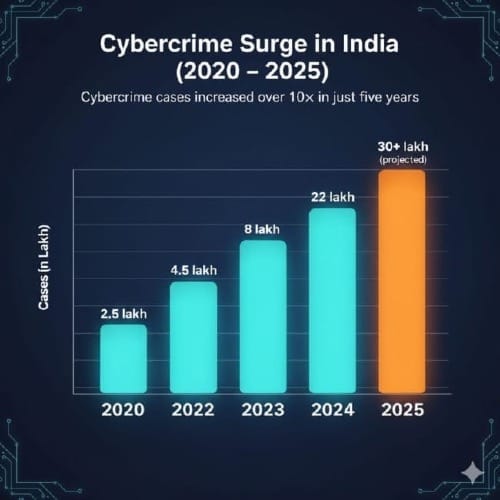
Some notable cases include:
- Bengaluru’s digital arrest scam: Between 2023 and October 2025, Bengaluru reported 44,177 cybercrime cases, with citizens losing over ₹4,143 crore. In one shocking incident, a 57-year-old IT professional lost ₹31.83 crore over six months to scammers posing as law enforcement officers Moneycontrol.
- Gujarat SIM card fraud ring: A gang was busted for issuing and exporting fraudulently activated SIM cards to foreign cybercrime syndicates. These were used in call centers targeting Indian citizens with phishing and extortion schemes WION.
- Telangana’s pharma extortion case: Two individuals impersonated USFDA officials and demanded $250 million from Hetero Drugs, threatening to leak fake compliance violations. The suspects used encrypted apps like Signal to carry out the scheme Moneycontrol.
- Children in cybercrime: Alarmingly, in Bengaluru, at least three children are involved in every 3,000 cybercrime cases, either as victims or unwitting participants. Experts warn of a severe lack of awareness among youth and call for better education on online safety Edex Live.
What This Means for Citizens and Authorities
These cases show that cybercrime in India is no longer limited to simple scams—it’s complex, organized, and often international. The CBI and State Police cyber cells must now deal with crimes involving encrypted communication, cross-border data flows, and psychological manipulation.
For citizens, this means being cautious with digital interactions, especially unsolicited calls, emails, and investment offers. For law enforcement, it means investing in cyber forensics, threat intelligence, and public awareness campaigns to stay ahead of evolving tactics.