China’s National Cyber ID: A Shift in Control, Not in Surveillance

July 23, 2025
China's new National Online Identity Authentication Public Service — or “National Cyber ID” — marks a pivotal shift in digital governance, framed as a tool to protect citizens’ privacy and reduce data collection by private companies. Yet beneath this veneer of cybersecurity and convenience lies a deeper and more troubling transformation: the centralization of digital identity under state control. By replacing decentralized identity verification with a government-managed system, Beijing strengthens its grip over online activity, raising serious concerns about surveillance, censorship, and the erosion of digital autonomy. While authorities claim the system enhances privacy, critics argue it paves the way for seamless state monitoring and the potential erasure of individuals’ digital existence at will. This initiative thus reflects a broader global trend toward digital ID systems — but with Chinese characteristics that blur the line between protection and authoritarian control.
A new kind of digital identity system is rolling out in China — the National Online Identity Authentication Public Service — and it’s already stirring debate. On paper, it promises more privacy for users by shielding their ID data from companies. In practice, critics see it as a further consolidation of government control over citizens’ online lives.
Here’s the core idea: instead of every platform asking users for personal ID data and managing it separately, all identity verification is now centralized and run by the government. You register once, the state verifies you, and companies can’t store your real ID anymore — unless the law says they can, or you give permission.
This means users won’t have to upload their ID to dozens of different websites anymore. That job — and the power to encrypt, verify, and store that data — now sits with the state. One entity to rule them all.
But it’s a double-edged sword.
Yes, it could reduce data leaks. Yes, it could stop shady data brokers. And yes, fewer companies will be harvesting and misusing ID data.
But at what cost?
Activists warn that China’s new cyber-ID simply swaps corporate surveillance for state surveillance. The centralization makes it easier for authorities to track, monitor, and — if needed — delete someone’s online presence. In the past, being banned from one platform didn’t block your access to others. Now, a single revocation from the government could erase your digital life altogether.
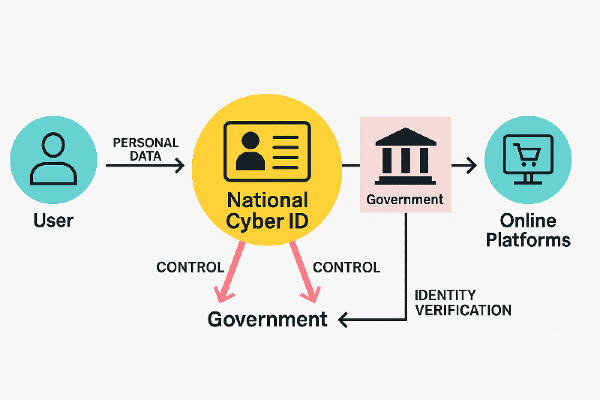
While countries like Australia and Singapore are also implementing digital ID systems, China's version is more opaque. Its rules include clauses about data privacy, but also vague exceptions that allow state access without notifying users. Analysts call this a bait-and-switch: privacy protections on the surface, surveillance loopholes underneath.
Another issue is transparency — or lack of it. There’s little public information about how the system is built, who maintains it, or what safeguards are actually in place. That’s what worries digital rights groups the most.
China insists the move is about security and protecting users from corporate abuse. A professor from a Chinese law university claim that apps using the system are collecting 89% less personal information. The Ministry of Public Security has echoed that.
Still, critics aren’t buying it. They say it’s not about protecting citizens from platforms — it’s about giving the state complete control over your digital identity.
The core shift here isn’t technical — it’s political.
The data stays online. But now, the keys are all in one hand.